


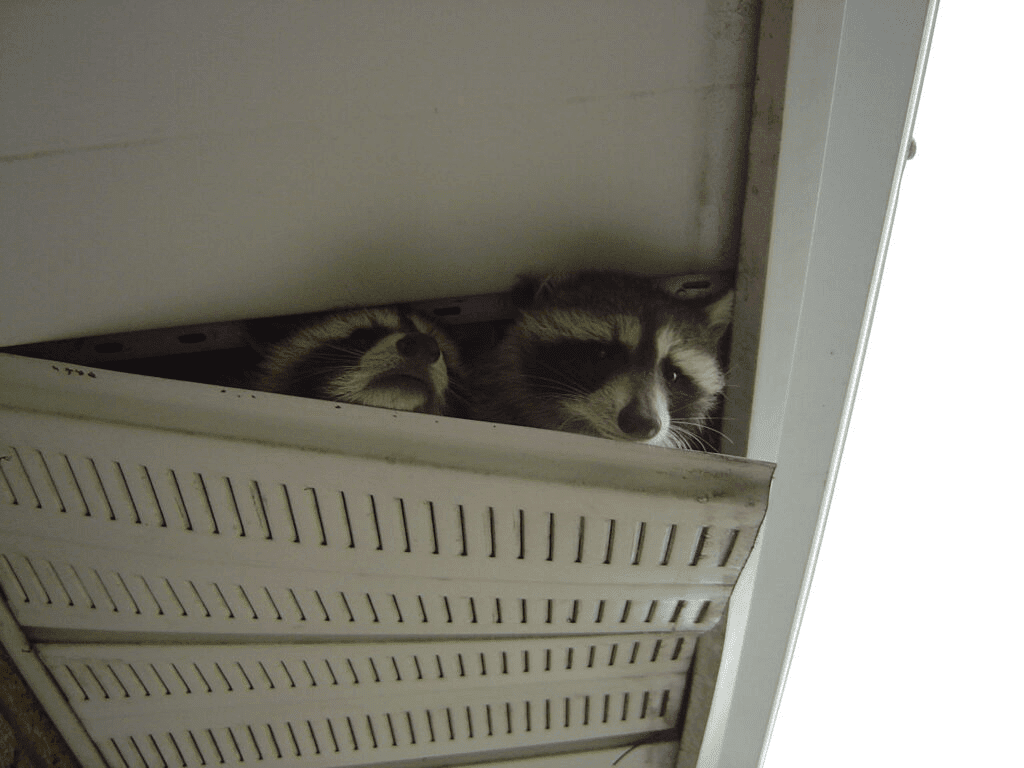
Raccoon mating season typically runs January through March. During this time, raccoons become more active and bold as they search for mates and secure warm, quiet denning areas—often inside homes.
What to watch for
- Heavy thumping or walking noises in attics or crawlspaces, especially at night
- Damaged rooflines, shingles, soffits, or vents
- Raccoons entering and exiting the home after dark
- Strong odors or visible nesting material
Potential damage
Raccoons are strong and destructive. They can tear open roofs, pull apart vents, crush insulation, and contaminate attics or crawlspaces with waste. Their damage often requires both wildlife removal and structural repair.
Why it matters
If raccoons establish a den during mating season, it often leads to babies in the attic, which limits removal options and increases costs and timelines.
What to do
Never seal entry points if raccoons may be inside. Secure trash and food sources, and contact a professional wildlife control service for inspection and humane exclusion.
Early action during raccoon mating season can prevent major structural damage and long-term issues.