


Squirrel mating season occurs twice a year, typically January–February and May–June. During these periods, squirrels become more active and aggressive as they search for mates and secure nesting sites—often inside homes.
What to watch for
- Scratching, running, or thumping noises in attics or walls
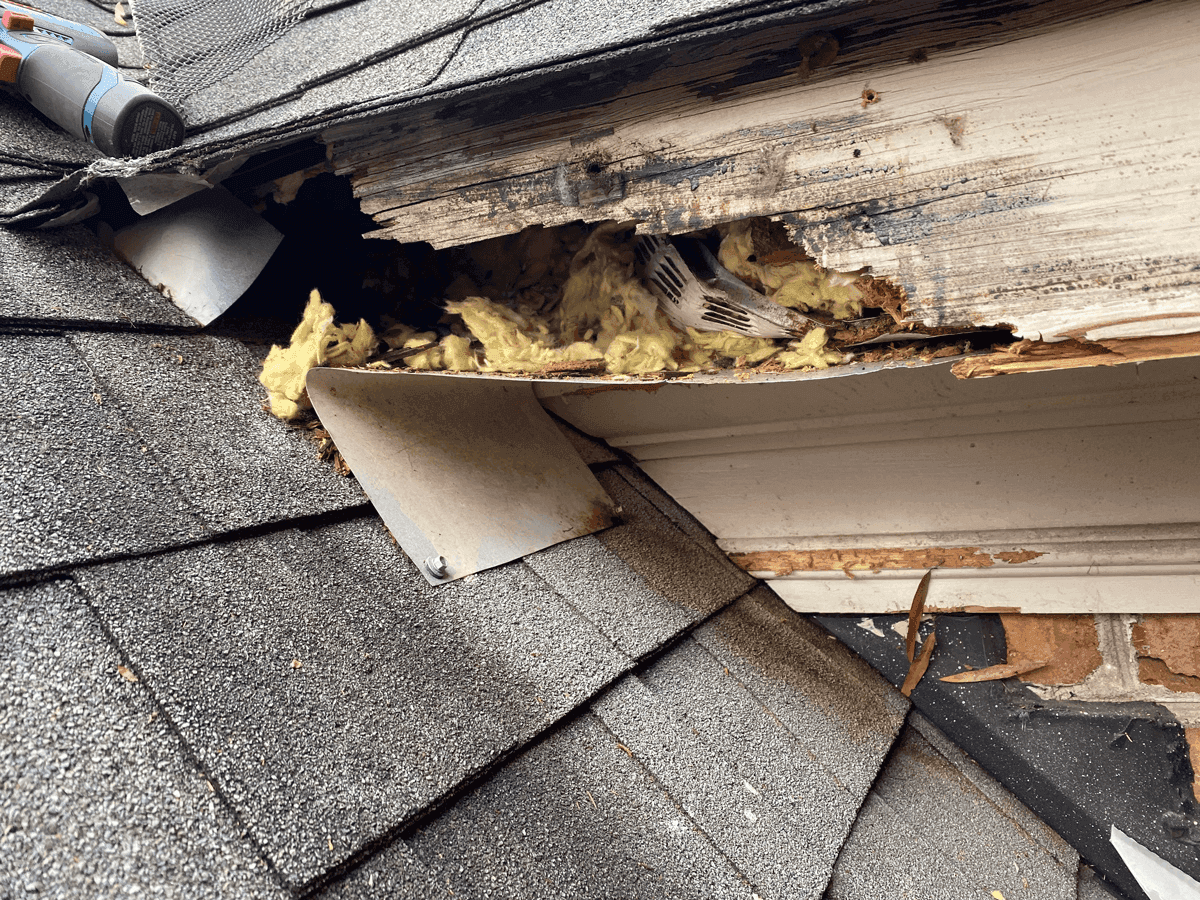
- Chewed rooflines, soffits, vents, or fascia
- Squirrels entering the home at dawn and dusk
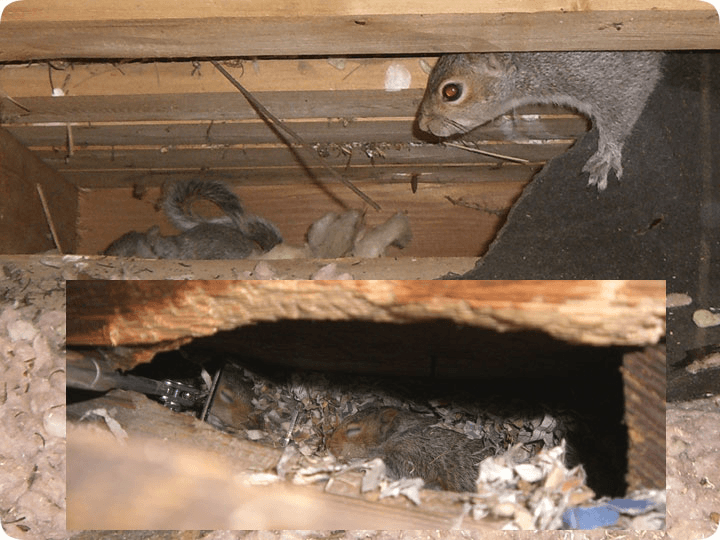
- Nesting material or droppings in attics
Potential damage
Squirrels are strong chewers. They can damage wood, shingles, vents, insulation, and wiring, creating fire hazards and costly repairs. Once inside, females may establish nests and give birth, increasing damage and noise.
Why it matters
If squirrels gain access during mating season, it often leads to attic nesting and babies, which restricts removal options and prolongs the problem.
What to do
Do not seal entry points if squirrels may be inside. Trim branches away from the home, secure vents, and contact a professional wildlife control service for inspection and humane exclusion.
Early action during mating season is the best way to prevent serious attic damage and repeat infestations